Priv.Doz. OÄ Dr.DI Lisa Pleyer
OA Dr. Konstantin Schlick
Dr. Petra Altenhofer
(Biologist)
Dr. Thomas Barta
(Biologist)
Jakob Wagner, MSc
(Biologist)


“We want to understand how these diseases ‘outwit’ the body’s own defenses so that we can counteract them with targeted therapies and help the body to effectively defend itself against the tumor again.”
Since 2009, we have been working intensively on diseases from the myloid group of forms, and we have developed a new research program with Assoc. Prof. Neureiter from the local pathology department and Dr. Viktoria Faber, who provided histological and cytological photos, have written a textbook on this subject (Figure 1). The diseases we deal with in detail include myelodysplastic syndromes, acute myeloid leukemia, chronic myelomonocytic leukemia and various overlap syndromes
We have established a national data register that has since become one of the largest data registers of its kind in the world and has led to many national and international collaborations. This registry collects anonymized data on the course of therapy, response and side effects of patients with these diseases who have been treated with hypomethylating substances. These diseases are characterized by so-called epigenetic changes, which can activate cancer genes on the one hand and inactivate cancer-preventing genes on the other. As a result, there is a massive proliferation of malignant stem cells (leukemic blasts) in the bone marrow and at the same time the maturation of normal blood stem cells into white blood cells, red blood cells and platelets is prevented.
Epigenetics refers to heritable changes in gene expression and the resulting cellular phenotype (= appearance) that are not caused by changes in the DNA sequence. One example of the enormous impact that epigenetic changes can have on appearance is the transformation of a caterpillar into a butterfly (Figure 3). It is the same animal, with the same DNA sequence (= genome). This pronounced change in external appearance from caterpillar to butterfly is caused by epigenetic changes in gene expression (=which genes are ‘read’ and ‘translated’ into proteins). Such epigenetic changes are significantly involved in the development and progression of myeloid neoplasms. Hypomethylating substances can partially reverse epigenetically controlled processes, reduce the growth and thus the number of cancer cells and also promote the maturation of normal blood cells.
The working group is investigating the efficacy of various hypomethylating substances in highly diverse patient groups in the world’s largest patient collective, and is clarifying the molecular and immunological mechanisms that are decisive for the success of the therapy. The aim is to identify the patients with the highest probability of a good response. Another focus is on analyzing chromosomes in the cancer cells and investigating whether the presence of certain mutations can predict the response to treatment. Furthermore, the group is investigating the exact interactions of the malignant cells with various cells of the surrounding immune system in order to identify new targets for targeted therapies so that even more effective treatment combinations can be developed (Figure).
The cancer cells influence the immune system in such a way that an environment is created in which the tumor can grow undisturbed and the body’s natural defense mechanisms are paralyzed. These changes can be partially reversed using targeted therapies and help the body to defend itself effectively against the tumor again.
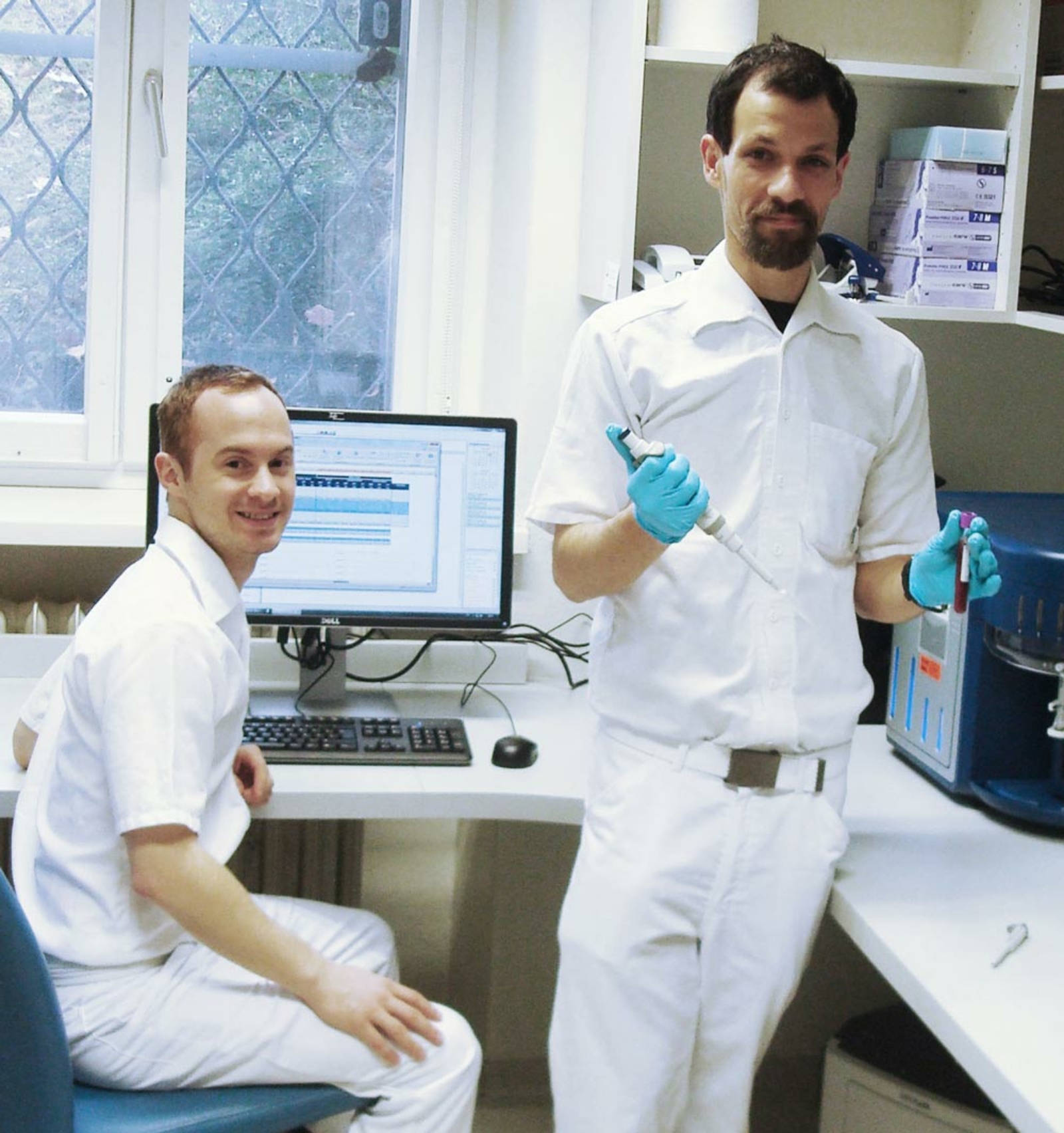
Another part of the group is working on new methods for efficiently and cleanly separating blood cells and tumor cells circulating in the bloodstream using complex ‘blood filters’. This will enable an even more precise examination of tumor cells in the future.
Priv.Doz. OÄ Dr.DI Lisa Pleyer
OA Dr. Konstantin Schlick
Dr. Petra Altenhofer
(Biologist)
Dr. Thomas Barta
(Biologist)
Jakob Wagner, MSc
(Biologist)
Get in touch with us – we will get back to you as soon as possible.
